Home

Journal cover design

Journal cover design

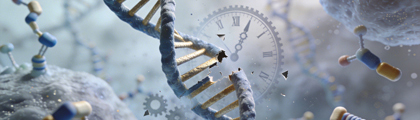
  • Slowing Aging: What Recent Research Tells Us About Longevity Science Slowing Aging: What Recent Research Tells Us About Longevity Science
    Feb 10, 2026
    Aging is something everyone experiences, yet for a long time it was treated as an unavoidable slide into decline. That view has started to change. Over the past decade, laboratory research has revealed that aging is not a single, passive process, but a collection of biological mechanisms that follow recognizable patterns. Many of these processes can now be measured, compared, and in some cases influenced. This shift has given rise to modern longevity science, a field that brings together molecular biology, clinical research, and evidence-based lifestyle studies to explore how aging might be slowed—and how more years of life might be spent in better health.   The Biology of Aging: From Molecules to Mechanisms At a fundamental level, aging reflects the gradual accumulation of cellular damage, a declining ability to repair tissues, and broad changes in metabolism and gene regulation. Researchers often describe these processes using the framework of the “hallmarks of aging.” These include genomic instability, cellular senescence, impaired protein maintenance, and mitochondrial dysfunction. Rather than viewing age-related diseases as isolated conditions, scientists increasingly see them as downstream consequences of these shared biological drivers. As a result, targeting the hallmarks themselves has become a central strategy in longevity research.   Breakthrough Laboratory Discoveries 1. Anti-aging drug combinations in animal models One widely discussed study from the Max Planck Institute for Biology of Ageing examined what happens when two existing drugs—rapamycin, an mTOR inhibitor, and trametinib—are used together in mice. The combination extended lifespan by up to 30% compared with untreated animals. Just as importantly, the mice did not simply live longer; they remained physically stronger and showed lower levels of chronic inflammation. The findings suggest that manipulating key signaling pathways can influence both lifespan and overall physiological function. 2. Genetic insights from animal research Genetic models continue to play a crucial role in aging studies. In one example, mice engineered to overexpress the enzyme SIRT6—a protein involved in metabolic regulation and DNA repair—lived significantly longer than controls. These animals also showed reduced inflammation and improved metabolic stability as they aged. Such results reinforce the idea that relatively small changes in gene regulation can have wide-ranging effects on aging trajectories. 3. Multi-gene drug repurposing networks More recently, computational approaches have added a new dimension to longevity research. By mapping thousands of genes linked to different aging hallmarks, scientists have identified existing drugs that may influence these networks. This systems-level perspective, often referred to as network medicine, allows researchers to prioritize drug candidates that act on multiple aging pathways at once, accelerating the search for viable interventions. 4. Synergistic effects of drug combinations in yeast Even simple organisms continue to offer valuable clues. In laboratory experiments with yeast, combinations of histone deacetylase inhibitors produced lifespan extensions far greater than those achieved by individual compounds alone. Because many core aging mechanisms are conserved across species, these findings help researchers explore how synergistic drug effects might translate to more complex organisms. 5. Nutritional interventions with molecular impact Nutrition research has also moved beyond broad dietary advice to examine how specific eating patterns affect aging pathways. Both laboratory and clinical studies show that interventions such as dietary restriction or time-restricted feeding can modulate nutrient-sensing pathways like mTOR and IGF-1. These changes are closely linked to mitochondrial performance, metabolic flexibility, and cellular stress resistance.   Emerging Human Clinical Evidence Animal models provide essential insight, but human data are increasingly shaping the field.   Vitamin D and telomere preservation A multi-year randomized clinical trial published in The American Journal of Clinical Nutrition reported that adults over 50 who took 2,000 IU of vitamin D3 daily experienced slower telomere shortening than those in the control group. Because telomeres play a protective role at the ends of chromosomes, their rate of shortening is often used as a marker of cellular aging and long-term disease risk.   Diet, exercise, and biological aging clocks The DO-HEALTH trial, one of the largest aging studies conducted in Europe, applied epigenetic “aging clocks” to estimate biological age. Participants who combined omega-3 supplementation, vitamin D intake, and regular strength training showed a measurable slowing of biological aging over three years. The results highlight how lifestyle factors can interact with molecular aging processes in meaningful ways.   Lifestyle Interventions With Molecular Impact Even as laboratory research advances, everyday habits remain powerful tools for influencing aging biology. Caloric and nutrient modulation: Moderate caloric restriction and thoughtful nutrient timing can alter metabolic signaling and cellular stress responses associated with aging. Physical activity: Regular exercise supports mitochondrial function, limits chronic inflammation, and promotes cellular repair, consistently correlating with slower biological aging. Sleep and stress control: Sleep quality and stress levels affect systemic inflammation and DNA repair, both of which play key roles in long-term aging processes.     Translational Challenges and Future Directions Despite encouraging results, translating laboratory findings into real-world therapies is not straightforward. Human complexity: Effects seen in animals often appear smaller in humans, whose biology and lifespans are far more complex. Safety and ethics: Intervening in core processes such as gene regulation or cellular reprogramming carries long-term uncertainties, requiring careful clinical oversight. Accessibility: As longevity technologies develop, ensuring fair and broad access will be an ongoing challenge.   Bringing Longevity Science to Life The path from laboratory discovery to clinical application is still unfolding, but the direction is clear. Future strategies are likely to combine pharmacological advances with precision nutrition, exercise science, and personalized diagnostics into integrated approaches to healthy aging. For science communicators, clear figure design can make complex mechanisms—such as senescence pathways or drug targets—easier to understand, while thoughtful cover design helps longevity research stand out in an increasingly crowded information landscape.    
    Read More
  • Why AI-Generated Hypotheses Are Changing the Way We Do Science Why AI-Generated Hypotheses Are Changing the Way We Do Science
    Oct 24, 2025
    For more than a century, scientific discovery has followed a familiar pattern: observe a phenomenon, propose a hypothesis, design experiments, and analyze results. But in the era of computational power and large-scale datasets, this sequence is being rewritten. AI-generated hypotheses—insights proposed directly by artificial intelligence systems—are rapidly transforming how scientists ask questions, test ideas, and accelerate breakthroughs. This shift is not simply about working faster. It represents a fundamental evolution in how knowledge is created.     From Human Intuition to Machine-Driven Insight Traditionally, hypotheses emerge from human intuition: researchers identify gaps in knowledge, interpret patterns, and speculate on possible explanations. But as scientific datasets explode in size—genomics, materials science, astronomy, climate data—human intuition alone is no longer enough. AI models can process millions of data points, recognize hidden structures, and propose connections that would take years for humans to detect. A 2023 study from MIT and the Broad Institute demonstrated that a machine-learning model could identify potential antibiotic molecules by screening over 100 million compounds in a matter of days—a process that would be impossible through manual hypothesis generation alone. This is the new scientific workflow: instead of starting with a hypothesis, researchers start with AI-flagged insights worth investigating. Why AI-Generated Hypotheses Matter 1. Faster Discovery Cycles AI can rapidly evaluate possibilities and narrow research trajectories. For example, in materials science, generative models now propose new battery materials with predicted properties, reducing discovery time from years to months. 2. Exploration Beyond Human Imagination AI is not limited by traditional disciplinary boundaries. Systems trained on biology, chemistry, and physics simultaneously can propose cross-disciplinary hypotheses that humans might overlook—for example, similarities between protein folding and mathematical knot theory. 3. Reduced Research Costs Automated hypothesis generation helps researchers eliminate dead ends early. Pharmaceutical companies report that AI-guided hypothesis testing cuts experimental costs by up to 40%, making R&D more efficient and scalable. 4. Democratization of Advanced Science AI tools enable smaller labs or early-career researchers to generate high-level research ideas without requiring decades of domain specialization. The result: a more inclusive scientific ecosystem where powerful tools help level the playing field. Real-World Examples of AI-Driven Hypothesis Innovation Drug Discovery AI systems like DeepMind’s AlphaFold and Insilico Medicine’s platforms generate hypotheses about protein interactions, binding sites, and drug structures. One Insilico-designed molecule progressed from hypothesis to Phase I trials in just 18 months, compared to the industry average of 4–6 years. Climate and Environmental Research Neural networks are now predicting ecosystem shifts, greenhouse-gas behavior, and weather extremes with remarkable accuracy—leading researchers to new hypotheses about land–atmosphere interactions and ocean circulation patterns. Physics and Astronomy AI has proposed new particle-interaction models and detected unusual patterns in cosmic data that hint at alternative dark-matter explanations—ideas that are now being formally tested. How This Shift Affects Scientific Communication The rise of AI-generated hypotheses is not just changing discovery; it is influencing how findings are communicated. Research teams increasingly rely on advanced visuals to explain complex, AI-driven insights to broader audiences and journal editors. Services like Illustration Design and Cover Design help transform data-heavy concepts into clear, compelling visuals that reflect cutting-edge research. As AI enables deeper, more abstract scientific models, high-quality visual communication becomes essential. Challenges and Ethical Considerations Despite the benefits, AI-generated hypotheses raise critical questions: Interpretability: Are AI-proposed ideas scientifically meaningful or just correlations? Bias: Biased datasets can lead to flawed or harmful conclusions. Oversight: How do we ensure responsible use without slowing innovation? Credit and authorship: Who “owns” a hypothesis generated by an algorithm? Most experts agree that AI should augment—not replace—human judgment. The strongest results come from collaboration between computational systems and human researchers who can evaluate biological, physical, or ethical plausibility. A New Era of Scientific Discovery AI-generated hypotheses are not merely a trend—they represent a paradigm shift in how humanity explores the unknown. By uncovering patterns too complex for human intuition, AI expands the boundaries of what we can investigate. Scientists no longer start with isolated observations; they start with data-driven predictions that point to entirely new scientific landscapes. As this transformation continues, the future of research will be defined by a partnership between human creativity and machine intelligence—accelerating discoveries that once seemed impossible.
    Read More
  • Academic Copyright: A Core Element in Protecting Research Output Academic Copyright: A Core Element in Protecting Research Output
    Jun 13, 2025
    In academia, copyright is more than just a legal concept—it’s a vital mechanism for protecting the original work of researchers, scholars, and educators. Whether it's research papers, lectures, teaching materials, charts, or data analyses, academic copyright ensures the rightful ownership and proper usage of scholarly output. This article provides a comprehensive guide to understanding the fundamentals of academic copyright, common misconceptions, practical applications, and strategies for addressing challenges—helping you approach academic publishing and knowledge dissemination with greater confidence.   Why Is Academic Copyright So Important? Copyright is not just a right—it’s a responsibility. It grants creators ownership over their original work, allowing them to control how it is used while sharing it with the public. Key benefits include: Protecting intellectual property: Safeguards the creator’s ideas and unique expressions from being stolen or misused. Encouraging research and innovation: Legal protection incentivizes scholars to invest time and effort into their work. Upholding academic integrity: Fosters a culture of respect for original contributions, reducing plagiarism and misuse. However, copyright protection can also create barriers to access, especially in the form of high subscription costs or paywalls. The rise of Open Access publishing is reshaping the balance between copyright and knowledge sharing.   Academic Copyright Copyright is a legal right granted to the creator of an original work, allowing them to control its reproduction, distribution, display, and adaptation. In academia, this covers: Academic articles and books Lecture slides and speech transcripts Charts, diagrams, and illustrations Certain original datasets   Originality and Scope Copyright protects expressions, not ideas. For instance, a research hypothesis can be discussed freely, but the specific wording, structure, or visuals in a paper are protected. The copyright term generally lasts for the author’s lifetime plus 70 years, after which the work enters the public domain.Fair Use provisions permit limited use of copyrighted content without permission for teaching, commentary, or research.   Ownership of Academic Work: Who Holds the Rights? Common scenarios include: Individual ownership: Typically applies to sole-authored papers or lecture materials. Institutional ownership: If the work is produced using significant institutional support or funding, the institution may hold the rights. Collaborative works: Multi-author projects often require pre-agreed copyright terms. Understanding ownership structures helps researchers determine their rights to use, share, or license their work.   Author Rights & Publishing Agreements As a creator, you typically hold rights such as: Reproduction rights: Control over copies and distribution Distribution rights: Authority to publish in specific outlets or platforms Derivative rights: Permission for translations, adaptations, or derivative works Display and performance rights: Control over public presentation or performance   When working with publishers, you may face: Copyright transfer: The publisher gains full control; the author gives up rights (common in traditional publishing). License to publish: The author retains some rights while granting the publisher permission to use the work.   Navigating Challenges:  Plagiarism and Infringement Plagiarism is both an ethical violation and a potential legal offense. Consequences can include retraction, academic misconduct investigations, or lawsuits. To avoid this: Always cite sources clearly Use plagiarism detection tools Follow your institution’s ethical guidelines   Open Access Publishing:  While Open Access increases visibility and reach, it still involves copyright considerations: Authors must decide whether to retain or transfer rights Publishers may charge article processing fees Without proper licensing, others may exploit the work commercially   Licensing and Permissions:  Understanding Creative Commons (CC) Licensing CC licenses are widely used in academia to facilitate sharing. Common types include: CC BY: Free use with author attribution CC BY-NC: No commercial use allowed CC BY-SA: Share-alike required for modified versions Choosing the right license can enhance your work's impact while protecting it from misuse.   How to Request Permission To use someone else's content: Identify the specific material (e.g., image, data, excerpt) Check the copyright notice or usage license If unclear, reach out to the copyright holder or affiliated institution Many universities and journals provide copyright guidance to help you stay compliant.   Conclusion Copyright Awareness Is Essential for Every Scholar Academic copyright is more than a legal formality—it reflects respect for your intellectual labor and supports ethical scholarship. Whether you’re a graduate student or a tenured professor, understanding copyright principles is key to a successful academic career. By mastering concepts like rights, licenses, and Open Access dynamics, you can: Protect your work from misuse Share responsibly and support knowledge exchange Negotiate publishing agreements with confidence Strike a balance between collaboration, sharing, and integrity May every researcher innovate with protection and share with purpose.   ✨ Make Your Work Shine Bright! ✨ Need a stunning cover design? Craving unique illustrations? We bring your vision to life with professional, eye-catching designs! 📩 Contact us now and turn ideas into reality! Where creativity stands out! — Your Needs, Our Inspiration!
    Read More
  • SCI Drawing Knowledge: Bitmap & Vector Graphics SCI Drawing Knowledge: Bitmap & Vector Graphics
    Mar 20, 2025
    When drawing scientific illustrations, we often face the choice between bitmap and vector graphics. This article will focus on exploring their definitions and differences for reference.   1. Image Types and Definitions Vector Graphics: Composed of mathematically defined curves, with anchor points and paths as their basic components.     Bitmap Graphics: Also known as raster or pixel graphics, they are composed of individual pixels. When magnified, it becomes evident that the image consists of tiny square pixels.     2. Image Types and Resolution Vector Graphics: They are resolution-independent, meaning they can be scaled to any size and printed at any resolution without losing clarity. Bitmap Graphics: Composed of pixels, so when an image is enlarged, the pixels also get bigger. Since each pixel has a single color, enlarging a bitmap image results in the well-known pixelation effect.   3. Image Types and Color Representation Bitmap Graphics: Capable of displaying rich and detailed colors, making them ideal for realistic images of natural objects. Vector Graphics: Due to mathematical constraints, they have limited color representation and cannot effectively depict realistic objects. Instead, vector graphics are often used for icons, logos, illustrations and other simple, clear designs. In the following images, you can see that bitmap graphics display a wider range of colors.   Bitmap Graphics Vector Graphics   4. Image Types and File Formats Common Bitmap Formats: bmp, pcx, gif, jpg, tif, psd of photoshop etc. Common Vector Formats: AI, EPS, SVG (AdobeIllustrator), dwg, dxf (AutoCAD), cdr (CorelDRAW), etc.   5. Image Type Conversion Vector graphics can be converted into bitmap images using graphic design software. However, converting a bitmap image into a vector graphic requires complex and extensive data processing, and the quality of the resulting vector image may vary significantly.
    Read More

leave a message

leave a message
Communicate content - Provide sketches - Signing the contract - Payment - Provide first draft - Revision - Finalization.
Submit

Our hours

Beijing time: 9:00-18:00

Contact Us:service@sondii.com

Home

Products

whatsApp

contact