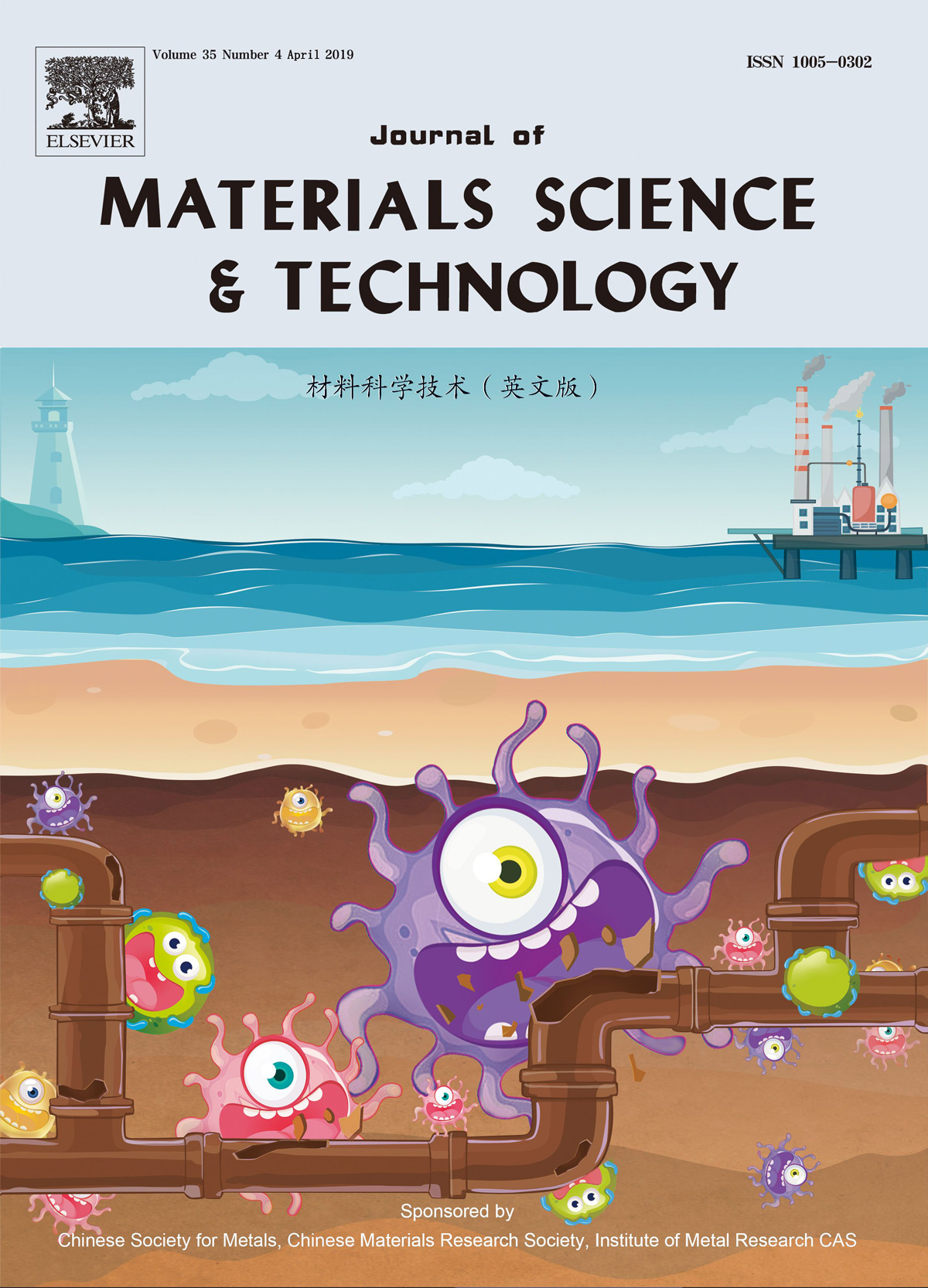
Journal of Materials Science & Technology
3 January 2019
Toward a better understanding of microbiologically influenced corrosion caused by sulfate reducing bacteria
Tingyue Gua,*, Ru Jiaa, Tuba Unsala, Dake Xub,*
a Department of Chemical and Biomolecular Engineering, Institute for Corrosion and Multiphase Technology, Ohio University, Athens, OH 45701, USA
b School of Materials Science and Engineering, Northeastern University, Shenyang, 110819, China
10.1016/j.jmst.2018.10.026
Many people believe that biogenic H2S is responsible for SRB MIC of carbon steel. However, in recent years, well designed mechanistic studies provided evidence that contradicts this misconception. Experimental data have shown that cathodic electron harvest by an SRB biofilm from elemental iron via extracellular electron transfer (EET) for energy production by SRB is the primary cause. It has been demonstrated that when a mature SRB biofilm is subjected to carbon source starvation, it switches to elemental iron as an electron source and becomes more corrosive. It is anticipated that manipulations of EET related genes will provide genetic-level evidence to support the biocathode theory in the future. This kind of new advances will likely lead to new gene probes or transcriptomics tools for detecting corrosive SRB strains that possess high EET capabilities.
Anhui Province Academy of Science and Technology, No. 128,Wanshui Road, Hi-Tech Zone, Hefei City, Anhui Province, China
 +86 17354022649
 service@sondii.com


 IPv6 network supported
Our hours
Beijing time: 9:00-18:00